The full menu
All dishes
Every dish in the TastyNepal collection — search by name, narrow by course, or find something meat-free for tonight.
20 dishes
 Staples & Mains
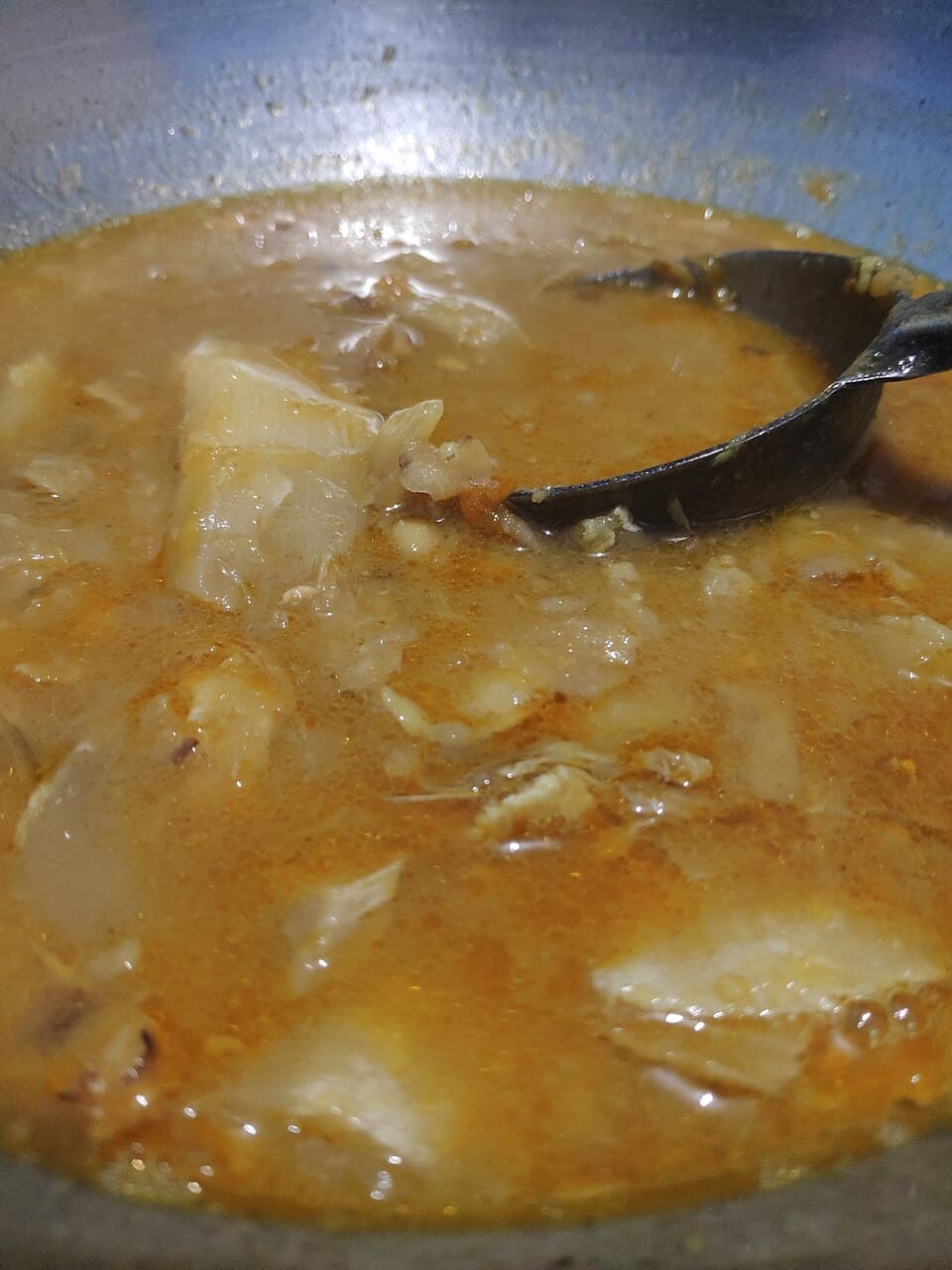
Aloo Tama Bodi
आलु बोडी तामाA soupy curry of potato, fermented bamboo shoots and black-eyed peas that is one of Nepal's most recognisable flavours, thanks to the sharp sourness the tama brings. The three ingredients play off each other: creamy potato, tangy bamboo and earthy beans in a thin turmeric-yellow broth. It is a Newar favourite, appears constantly on dal bhat trays, and is often cooked for festivals and gatherings.
 Staples & Mains
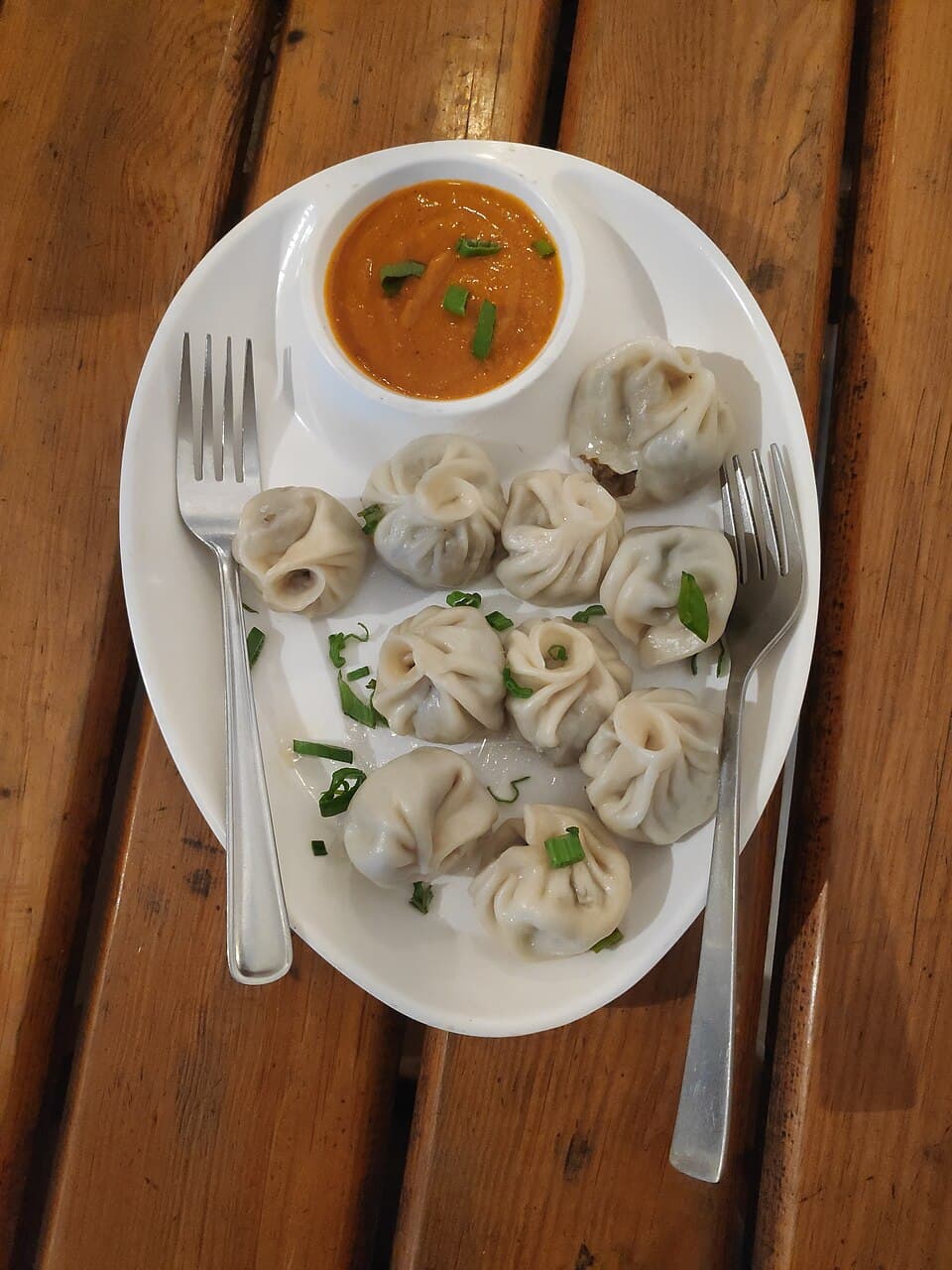
Buff Momo
बफ मम:Buffalo momo are the original and still the definitive Kathmandu dumpling, cheap enough to be everyday food and rich enough to feel like a treat. Buffalo mince carries far more fat and flavour than chicken, so the filling releases a mouthful of hot broth when you bite in. Ordering a plate of ten with extra achar is a ritual for students, office workers and taxi drivers across the valley.
 Staples & Mains
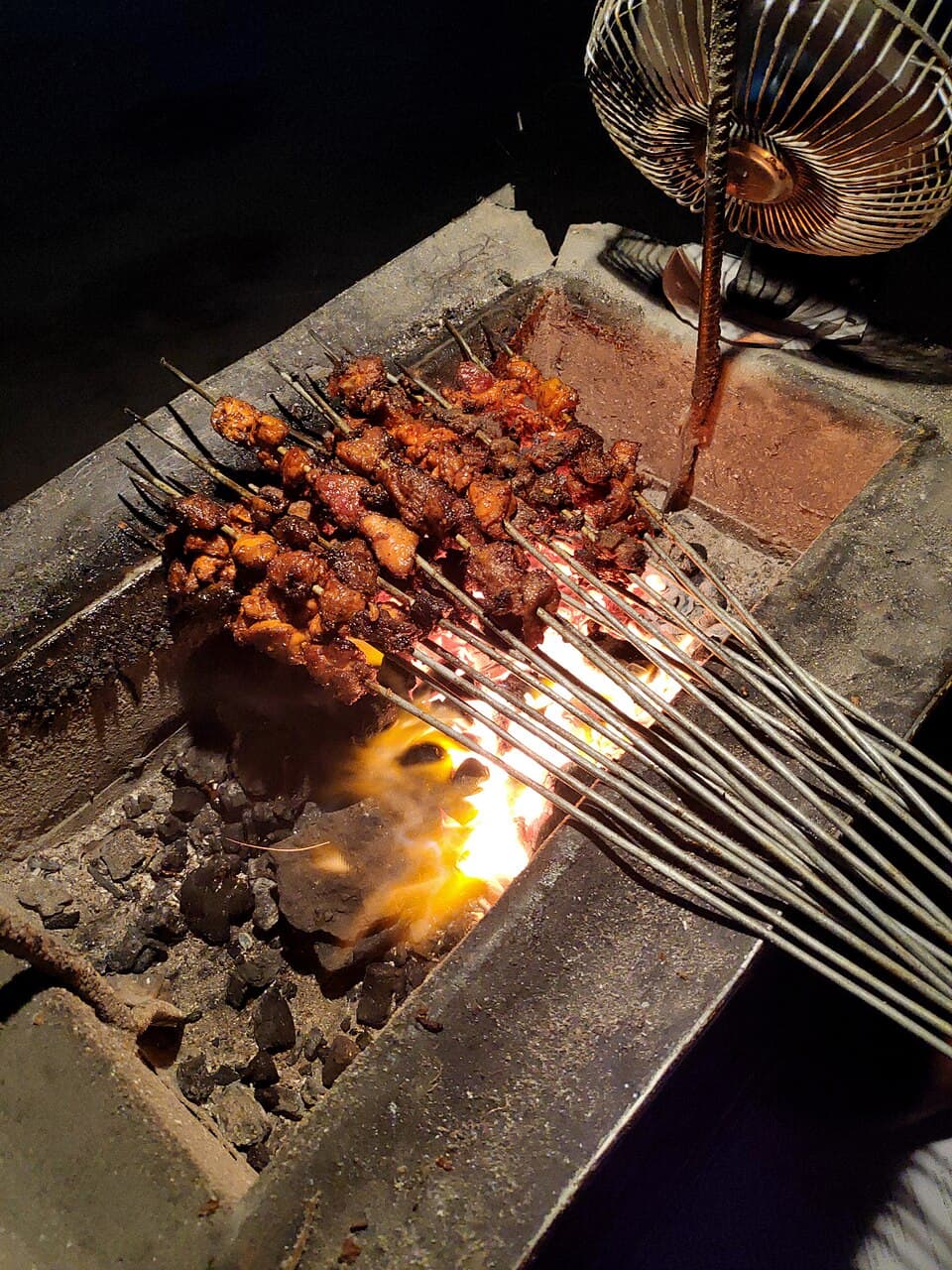
Chicken Sekuwa
कुखुराको सेकुवाSekuwa is meat marinated in mustard oil, yoghurt, ginger-garlic and toasted Nepali spices, then skewered and grilled over charcoal until the edges char and smoke. Eastern Nepal, especially Dharan and Tarahara in Sunsari district, is famous for it, and roadside sekuwa houses grill to order all evening. It is eaten with chiura, sliced onion and a sharp achar, and traditionally washed down with raksi.
 Staples & Mains
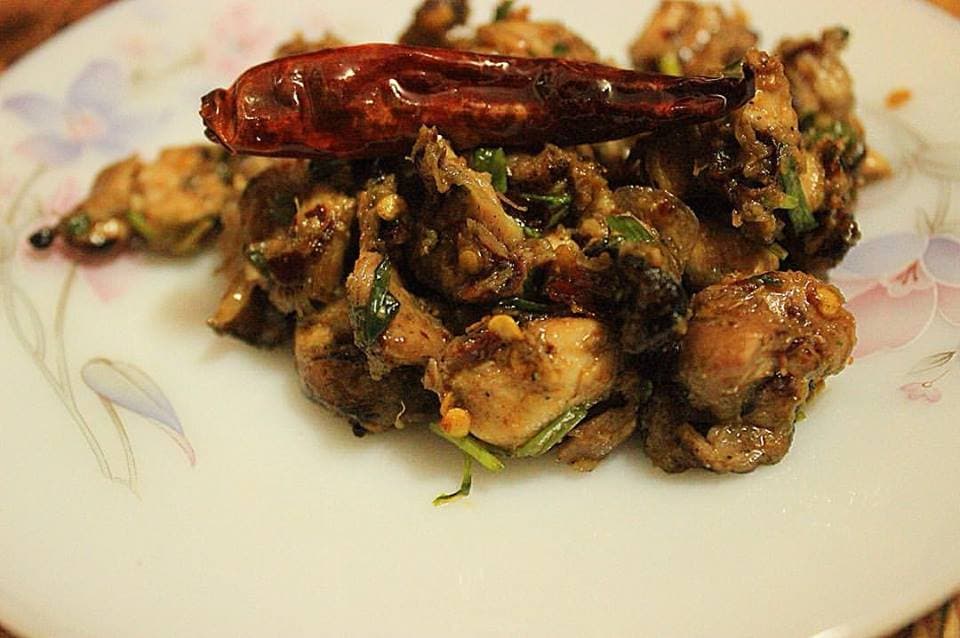
Choila (Buff)
छोयलाA Newar classic of buffalo meat grilled over flame, then tossed while still warm with mustard oil, ground chilli, timur and a shower of raw ginger and garlic. Haku choila is charred traditionally over a straw fire, while mana choila uses boiled meat instead. Eaten with chiura and beer or aila, it is essential at Newar festivals and forms part of the ceremonial samay baji platter.
 Staples & Mains
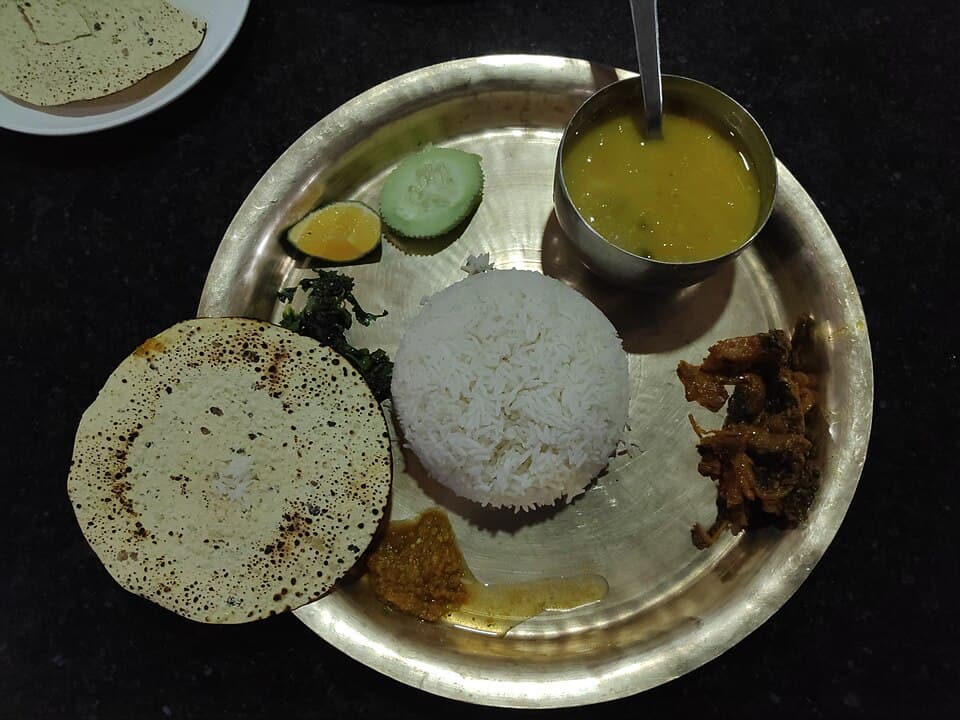
Dal Bhat Tarkari
दाल भात तरकारीNepal's national meal and the plate most Nepalis eat twice a day: soupy lentils poured over steamed rice with a seasonal vegetable curry alongside. The magic is in the balance rather than any single element, with pickles, sauteed greens and a spoon of ghee rounding out the tray. Trekkers know it by the saying 'dal bhat power, twenty-four hour' because a plate is traditionally refilled until you wave it away.
 Staples & Mains
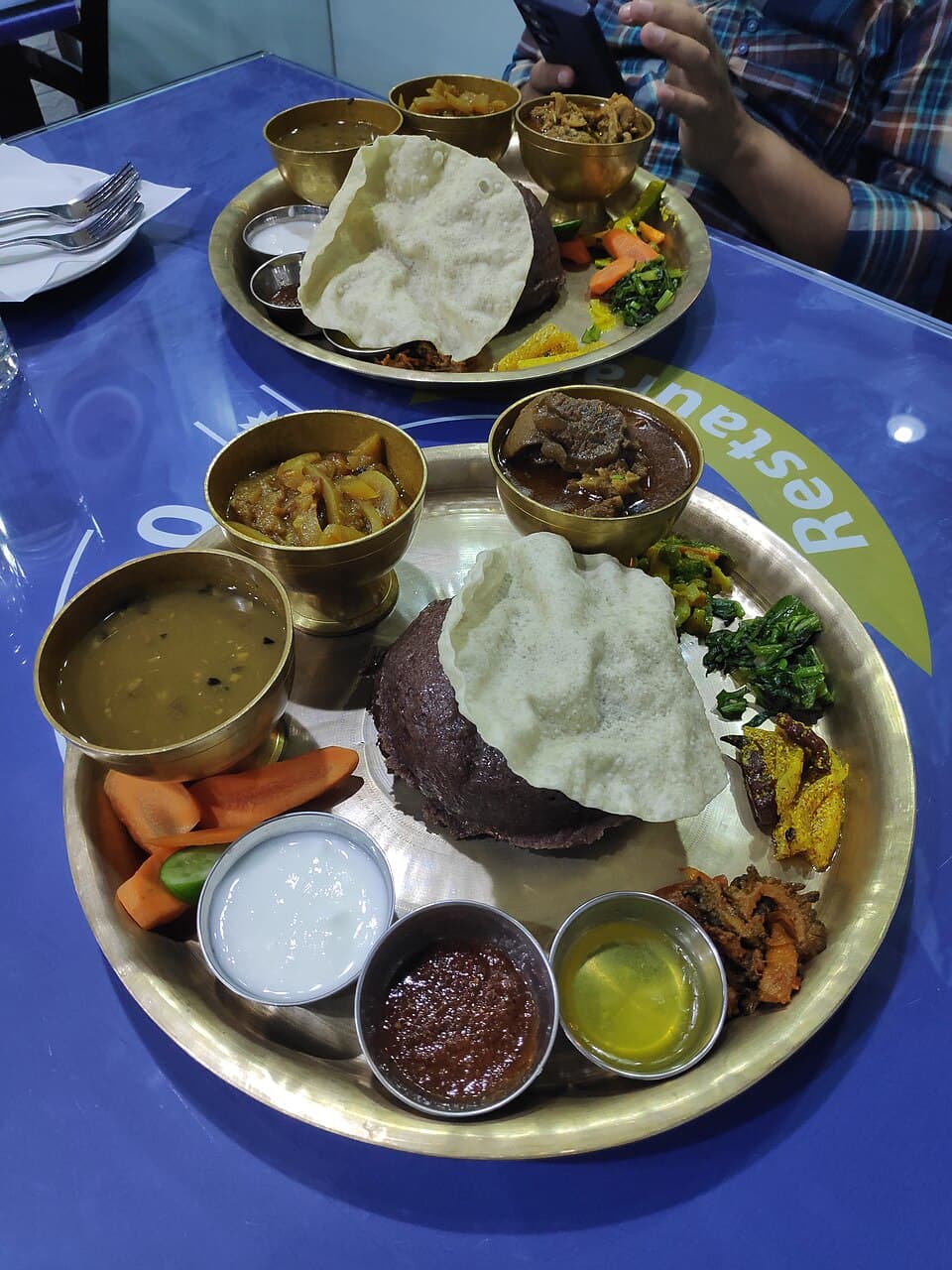
Dhido
ढिँडोDhido is made by beating buckwheat or millet flour into boiling water until it thickens into a dense, smooth mass that is scooped up by hand and dipped into soup or curry. For generations it was the daily grain of Nepal's hill and mountain households, and it was long looked down on next to rice. That has flipped in recent years, and it now appears proudly on urban restaurant menus as a nutrient-dense heritage food.
 Staples & Mains
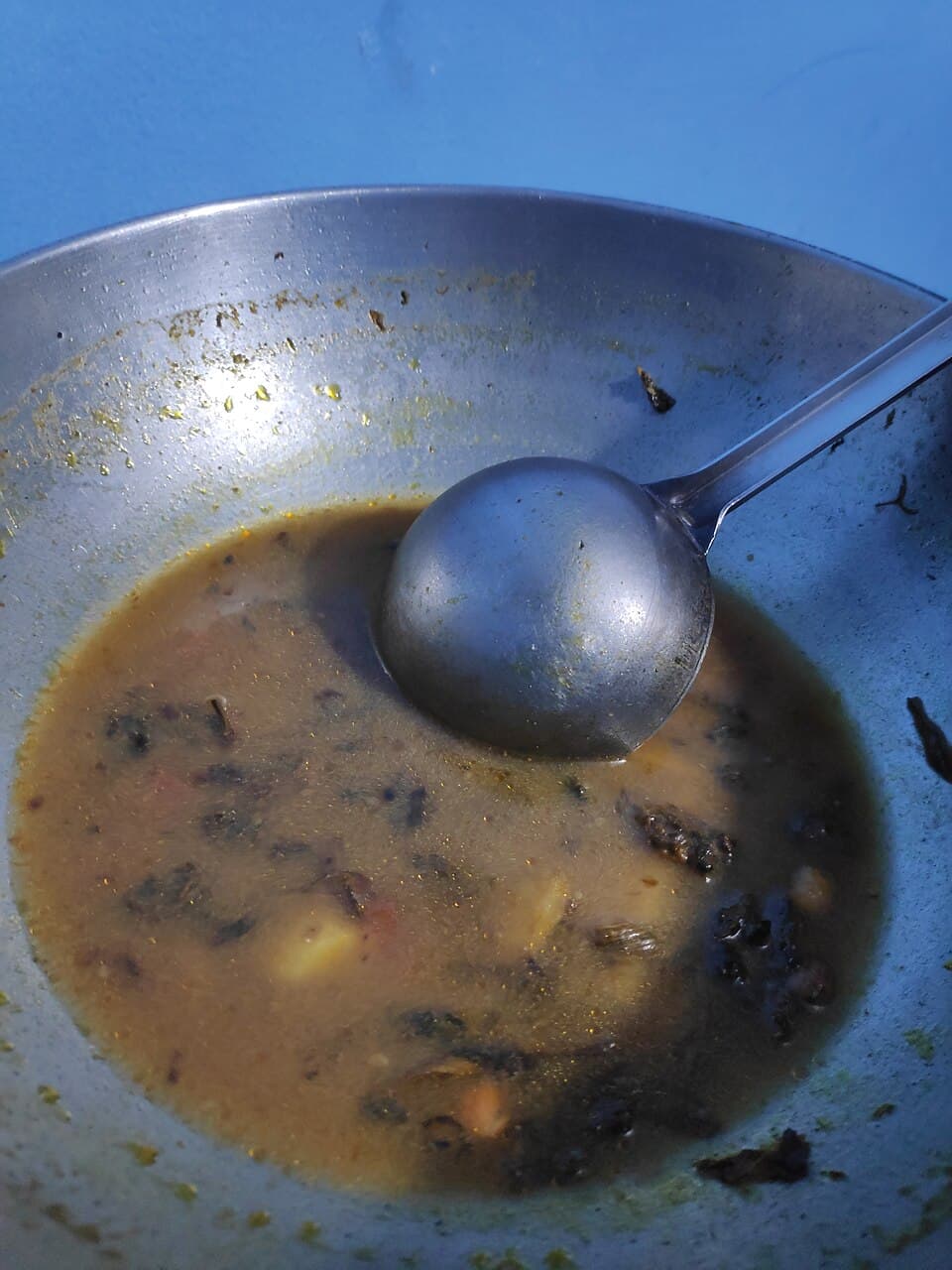
Gundruk ko Jhol
गुन्द्रुकको झोलGundruk is leafy greens that have been fermented and then sun-dried, and boiling it into a thin soup with potatoes, tomatoes and soybeans gives you one of the most distinctive flavours in Nepali cooking: sour, smoky and deeply savoury. It was born of necessity, a way to keep vegetables through the winter months when nothing grows. Nepalis eat it with rice or dhido, and it is the classic partner to a cold evening.
 Staples & Mains
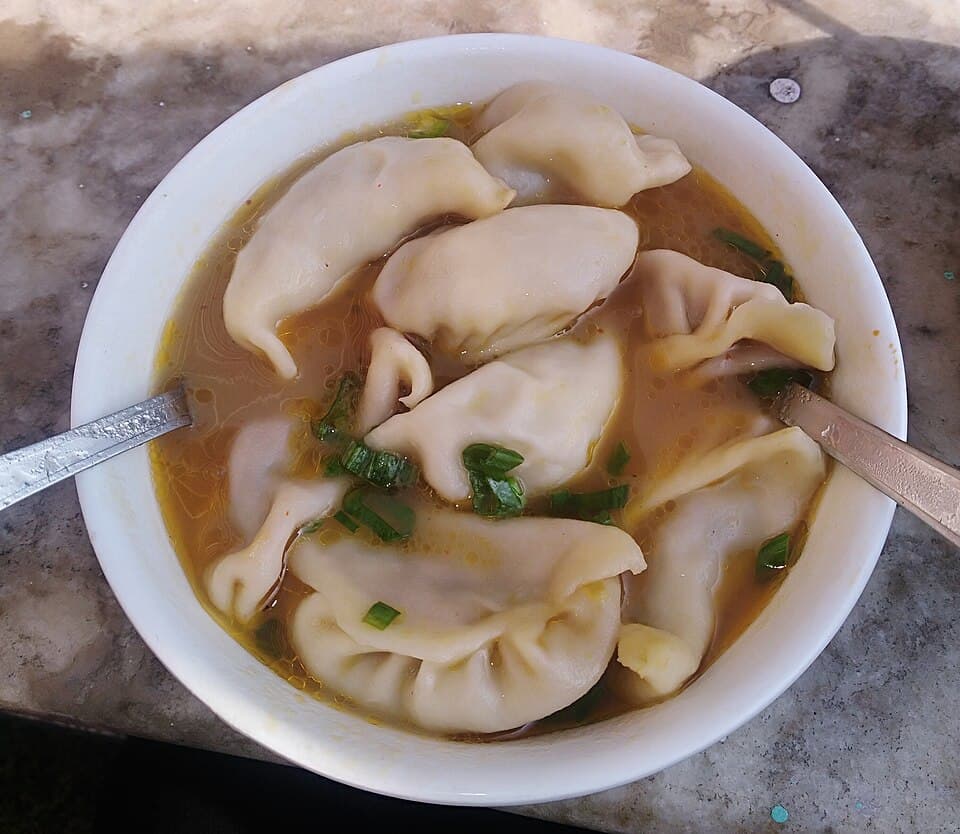
Jhol Momo
झोल मम:The youngest member of the Kathmandu momo family, invented in the small dumpling shops of Patan and Bhaktapur in the late 1990s. Steamed momo are floated in jhol achar, a thin, tangy sesame-and-tomato broth sharpened with chilli and timur, so the dumplings soak up sauce as you eat. It is messy, sour, numbing and addictive, and best eaten with a spoon in one hand.
 Staples & Mains
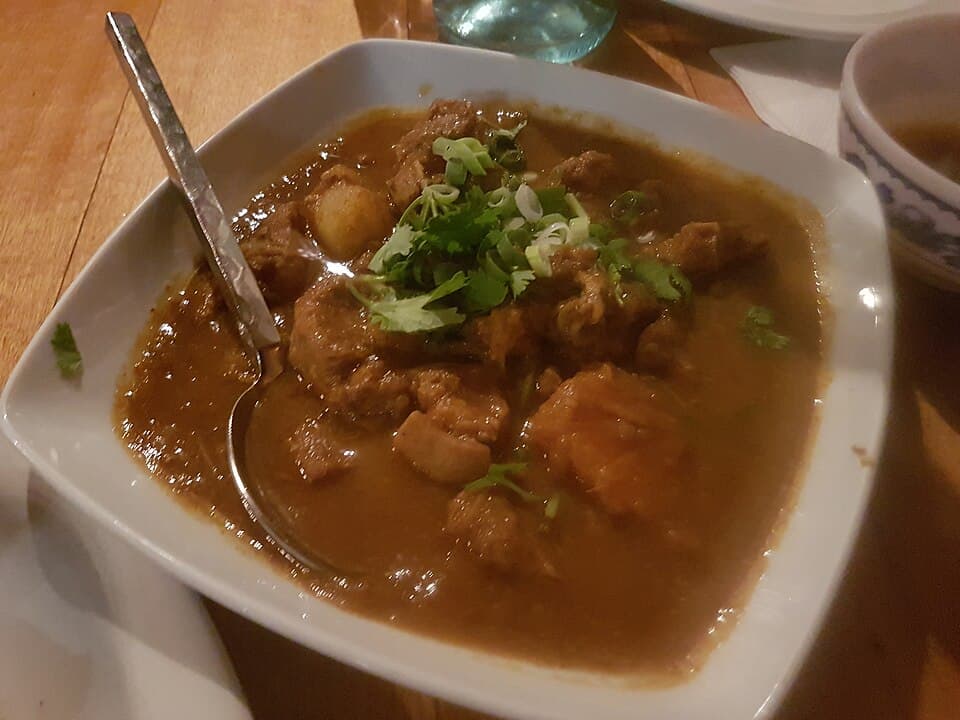
Khasi ko Masu (Goat Curry)
खसीको मासुBone-in goat simmered slowly in mustard oil with caramelised onion, tomato and the unmistakable Nepali trio of timur, jimbu and fenugreek. This is the centrepiece of Dashain, when families gather and goat is cooked in enormous pots for days of feasting. The long, low simmer is not optional: it is what turns tough hill goat into meat that slides off the bone.
 Staples & Mains
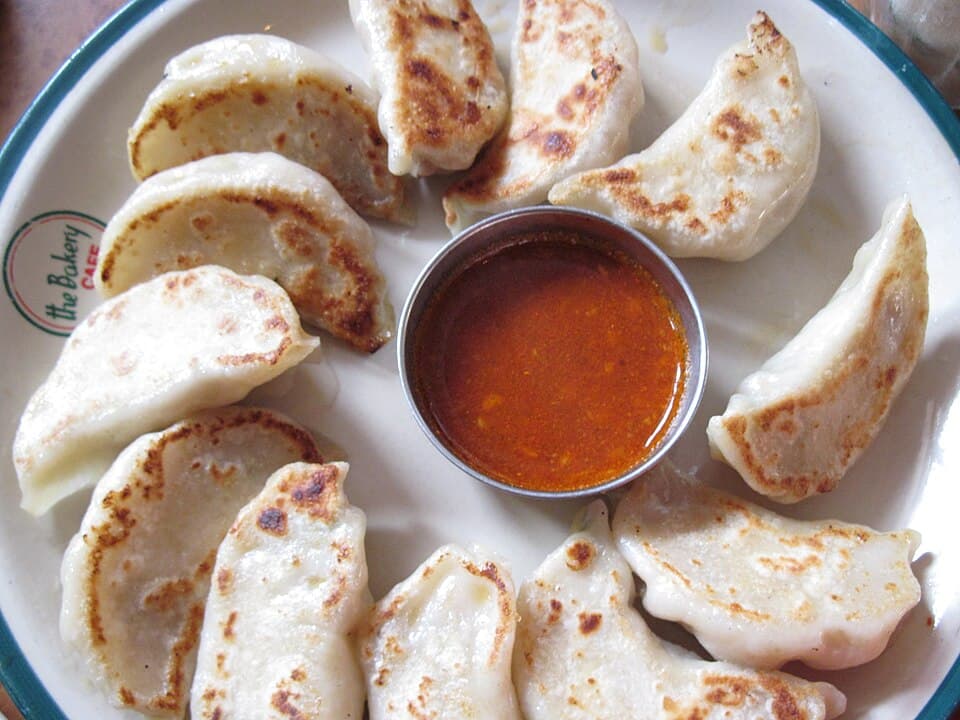
Kothey Momo
कोठे मम:Half-steamed and half-fried, kothey momo are first cooked through in a steamer and then laid flat on an oiled pan until one side turns crisp and lacquered brown. The contrast between the crackling base and the soft pleated top is what regulars queue for. They are a standard evening order in Kathmandu momo houses, usually alongside a glass of tea or something stronger.
 Staples & Mains
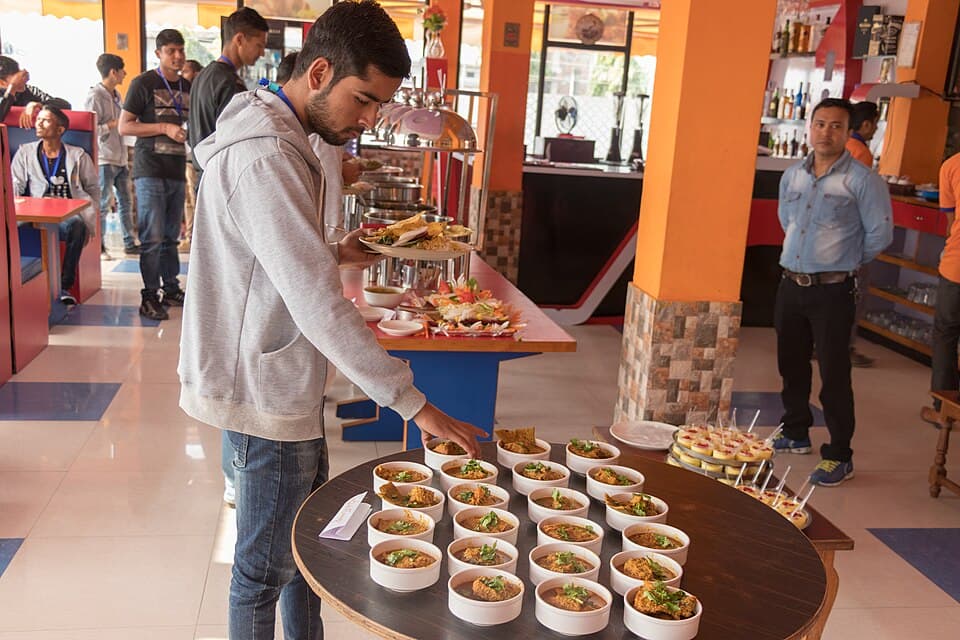
Kukhura ko Masu (Chicken Curry)
कुखुराको मासुThe everyday Nepali chicken curry: bone-in pieces browned in mustard oil and simmered with onion, tomato and warm ground spices into a thin, spoonable gravy rather than a thick sauce. It is the standard non-vegetarian addition to a dal bhat tray and the dish most households cook when guests arrive unannounced. Timur and a touch of jimbu are what mark it out from its Indian cousins.
 Staples & Mains
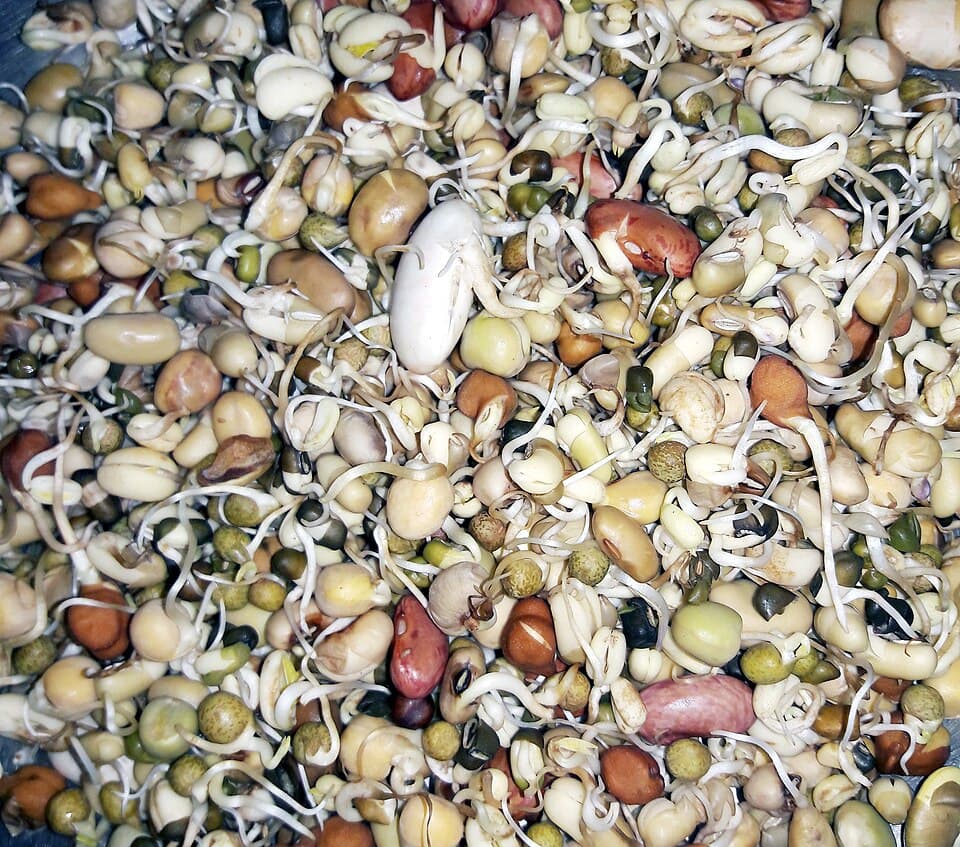
Kwati
क्वाँटीA thick soup of nine different sprouted beans, eaten above all at Janai Purnima, the full-moon festival at the end of the monsoon. The name comes from Newar, where kwa means hot and ti means soup, and the dish is credited with driving out the dampness and sluggishness of the rainy season. Sprouting the beans for several days beforehand is part of the ritual as much as the cooking.
 Staples & Mains
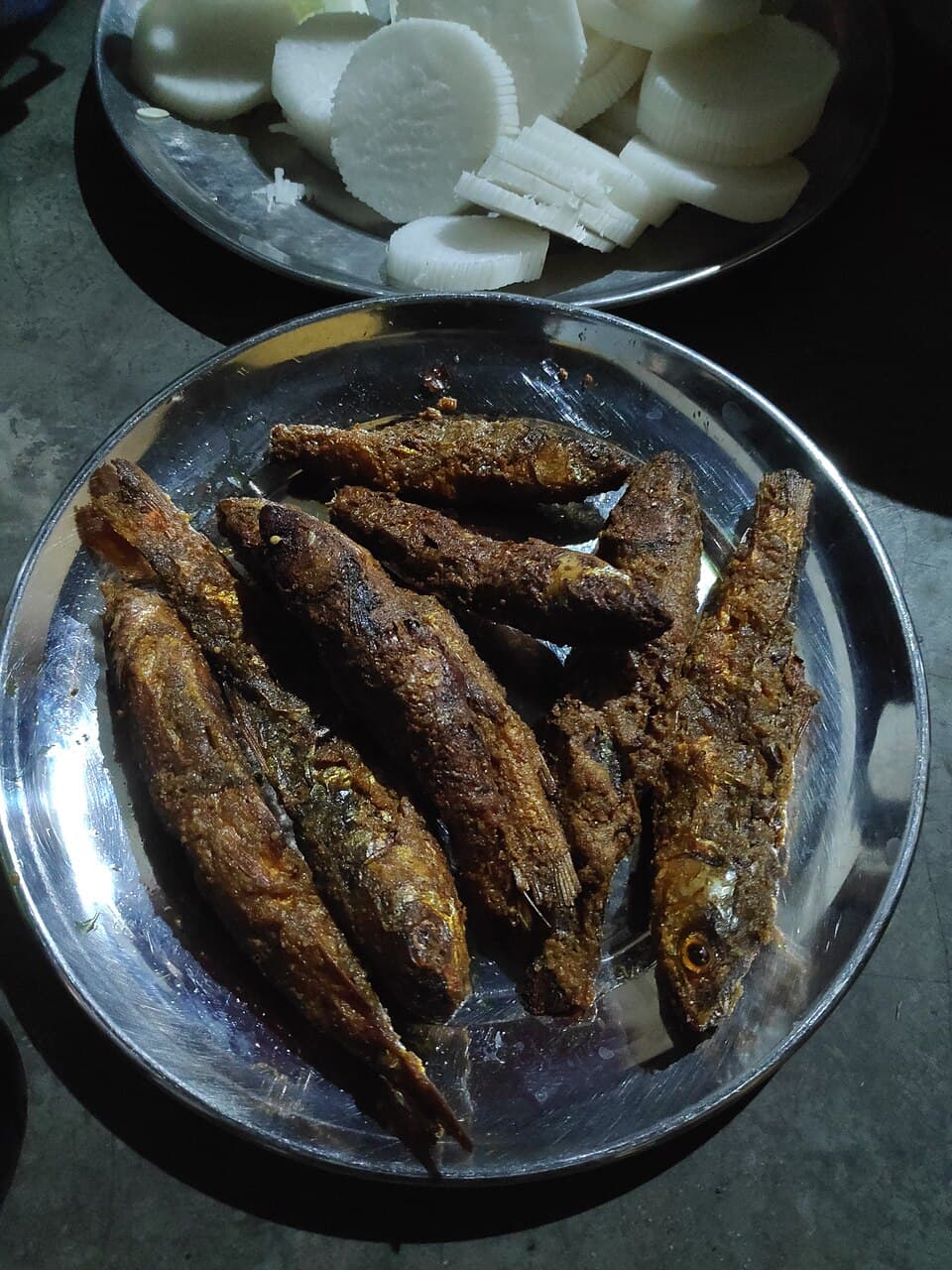
Machha Tareko (Fried Fish)
माछा तारेकोFreshwater fish from the Terai's rivers and ponds, rubbed with turmeric, chilli and lemon and shallow-fried in mustard oil until the outside is crisp and the flesh stays soft. Rohu and the local asala trout are the usual choices, and the dish turns up on dal bhat trays across the southern plains. It is simple, quick, and relies entirely on the fish being fresh.
 Staples & Mains
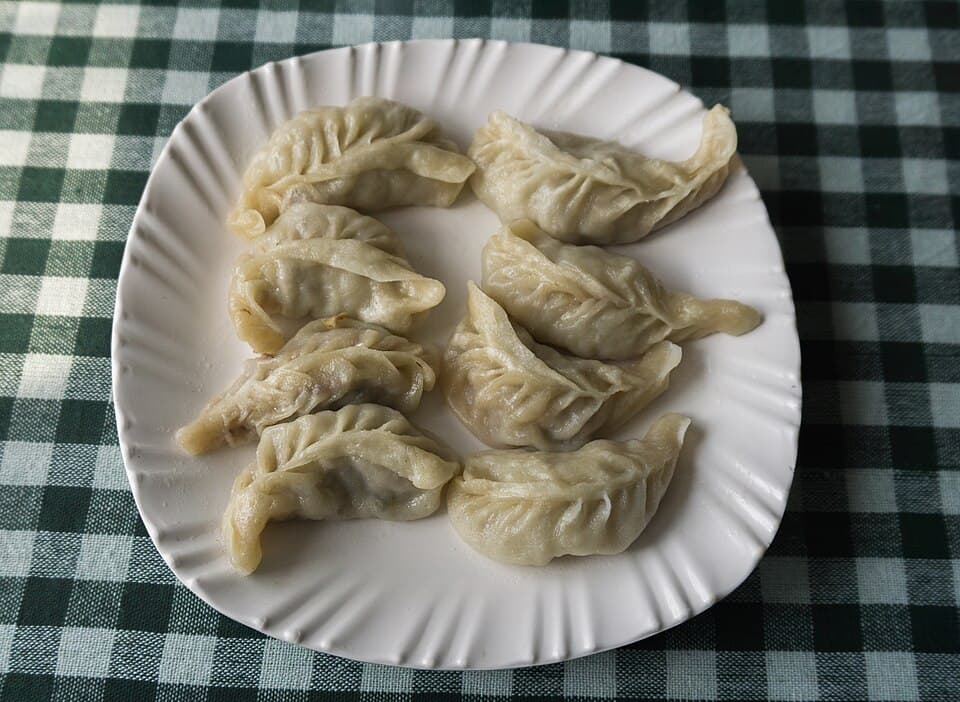
Momo (Steamed Dumplings)
मःमःPleated dumplings steamed in bamboo baskets and served with a fiery tomato-sesame achar, momo arrived with Tibetan and Newar trade routes and became Nepal's most beloved everyday food. Every neighbourhood has its own momo shop, and the ritual of tearing one open to drink the hot juice before dipping it is half the pleasure. They are eaten as lunch, as a snack, and as the default order whenever friends meet.
 Staples & Mains
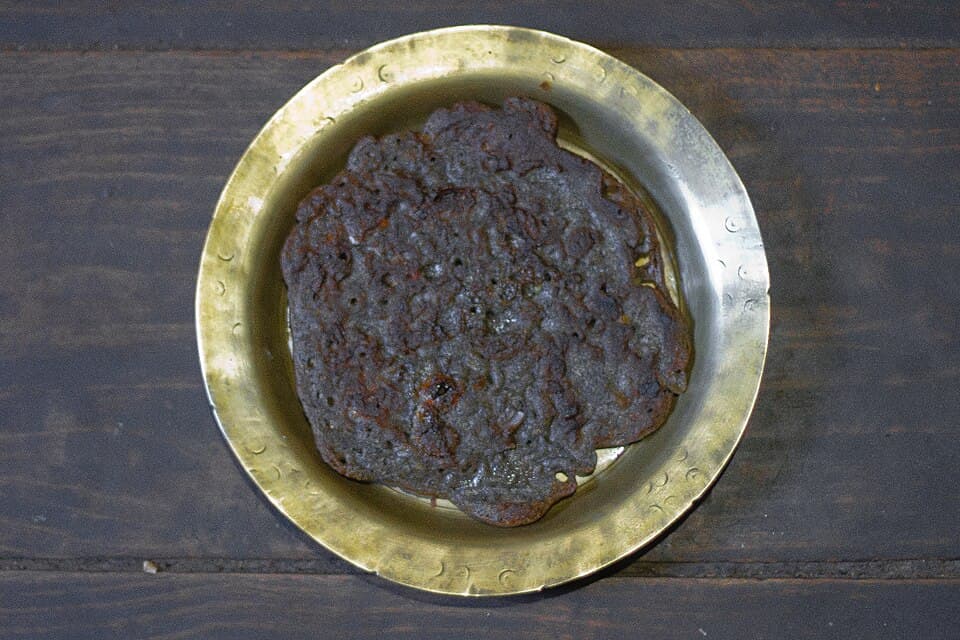
Phapar ko Roti with Curry
फापरको रोटीBuckwheat grows where rice and wheat will not, so in Mustang and the high valleys phapar ko roti is the daily bread: a pale grey, slightly nutty flatbread cooked on a griddle. Thakali households know it as ghoken and serve it with dal, a vegetable curry, or simply with chilli-timur salt and a bowl of buttermilk. It is soft and pliable when hot and best eaten straight off the pan.
Sherpa Stew (Shyakpa)
श्याक्पाShyakpa is the one-pot stew of the Sherpa villages of the high Khumbu, built from hand-cut squares of dough, root vegetables and whatever meat is available, usually yak or mutton. Unlike the thin, spicy thukpa, it is thick, mild and filling, designed to put warmth back into people working at altitude. A pot sits on the stove through the evening and everyone eats from it as they come in.
 Staples & Mains
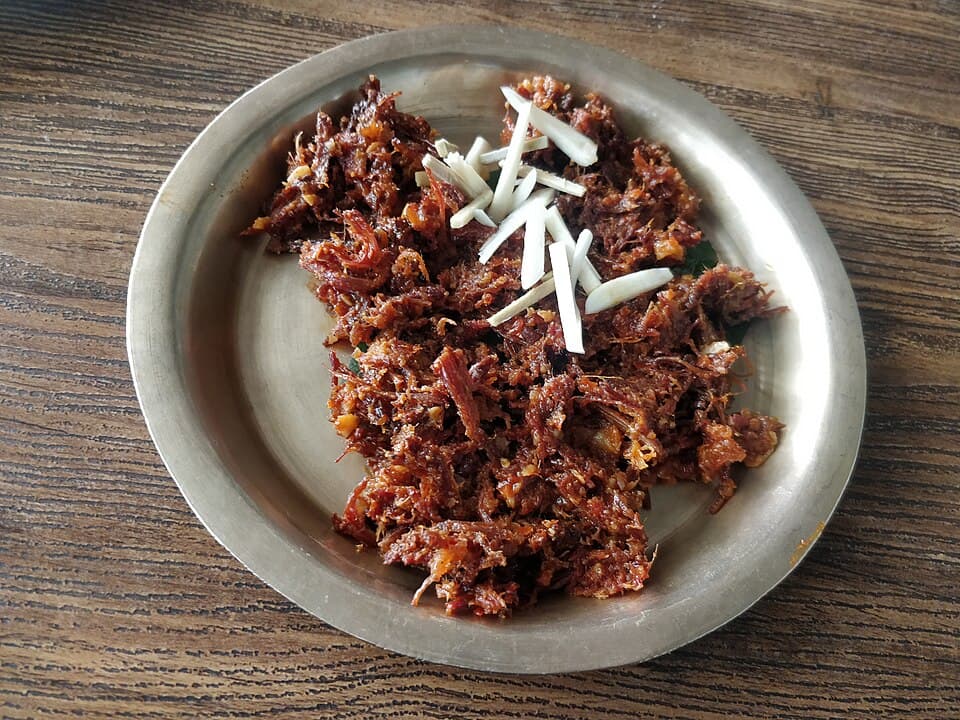
Sukuti
सुकुटीSukuti is meat, usually buffalo or goat, that has been salted, spiced and air-dried into hard strips, then rehydrated and cooked into a chewy, intensely savoury dish. A staple of the Limbu people, who call it sakhekya, it began as a way of carrying protein through mountain winters when fresh meat was scarce. Today it is equally at home as a rice accompaniment or as the standard snack in a bhatti with a glass of raksi.
 Staples & Mains
Taas
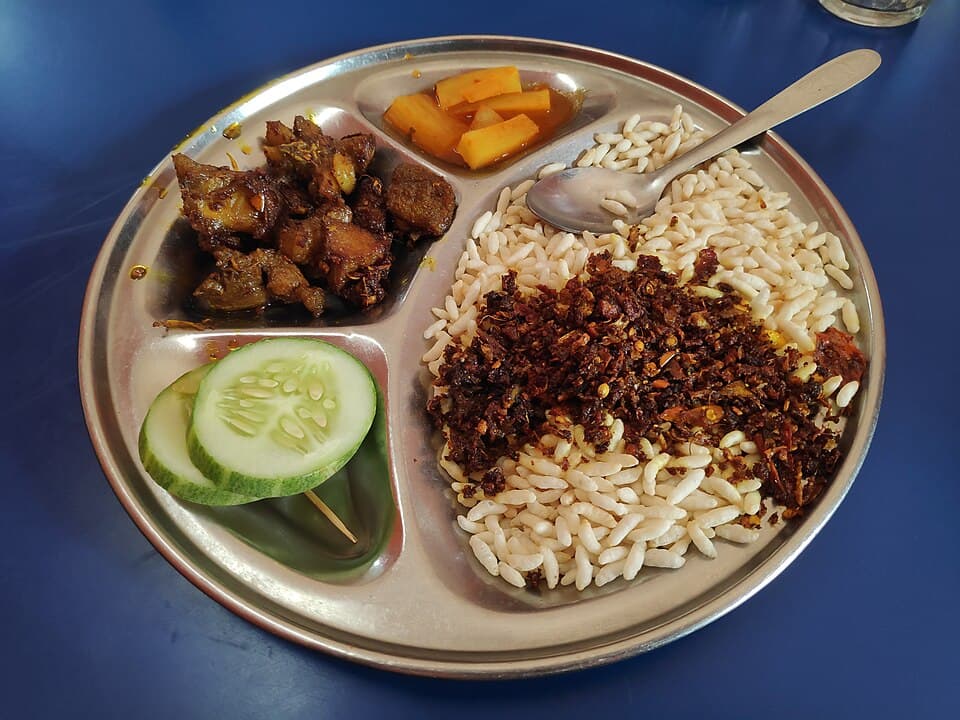
तासA Chitwan speciality that has spread across Nepal: thin slices of goat or buffalo marinated in a freshly ground spice blend and cooked slowly on a wide, flat iron tawa until the liquid evaporates and the edges crisp. The spicing is unusually complex for a Nepali meat dish, with mace, fennel and black cumin among a dozen or more components. It is served with puffed or beaten rice and a sharp radish and cucumber salad.
 Staples & Mains
Thakali Khana Set
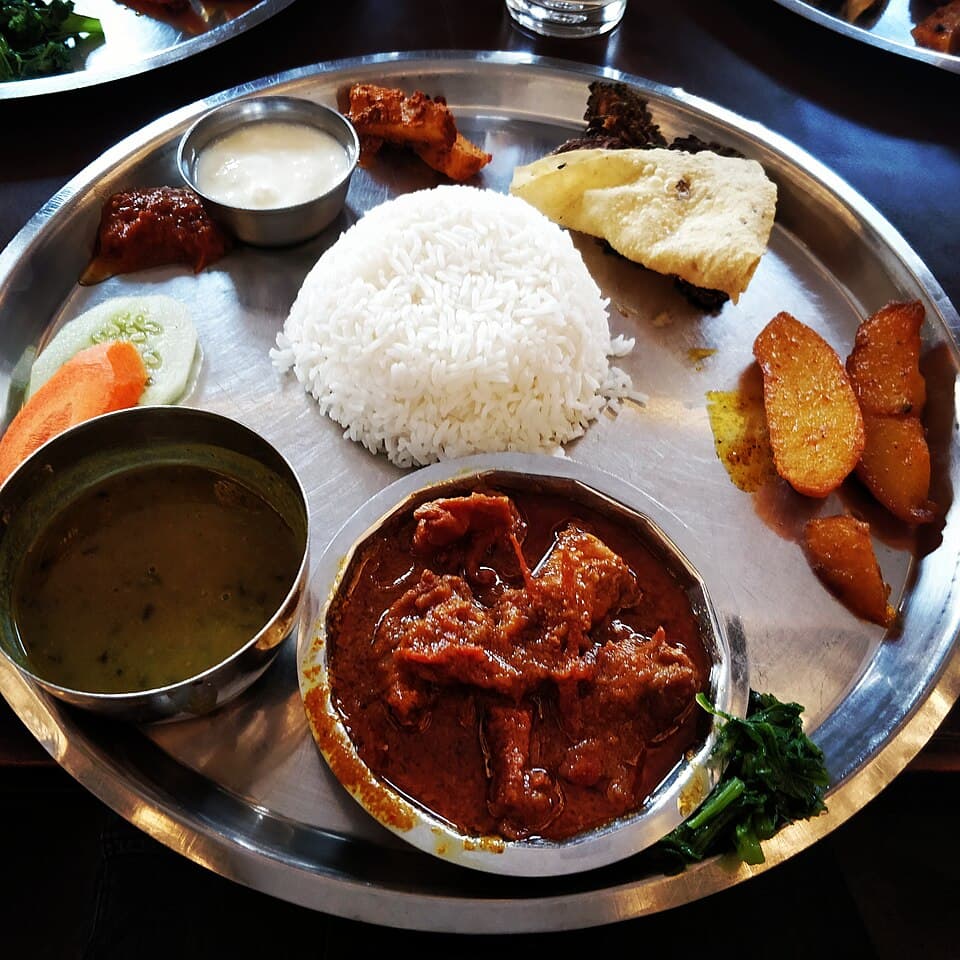
थकाली खाना सेटThe refined set meal of the Thakali people of the Kali Gandaki valley in Mustang, and widely considered Nepal's finest sit-down plate. Rice sits at the centre ringed by jimbu-scented dal, two or three tarkari, sauteed greens, gundruk, radish and tomato achar, papad and a knob of ghee, with meat added if you want it. Timur gives the curries a citrusy tingle rather than raw heat, and the whole tray is built around balance.
 Staples & Mains
Thukpa
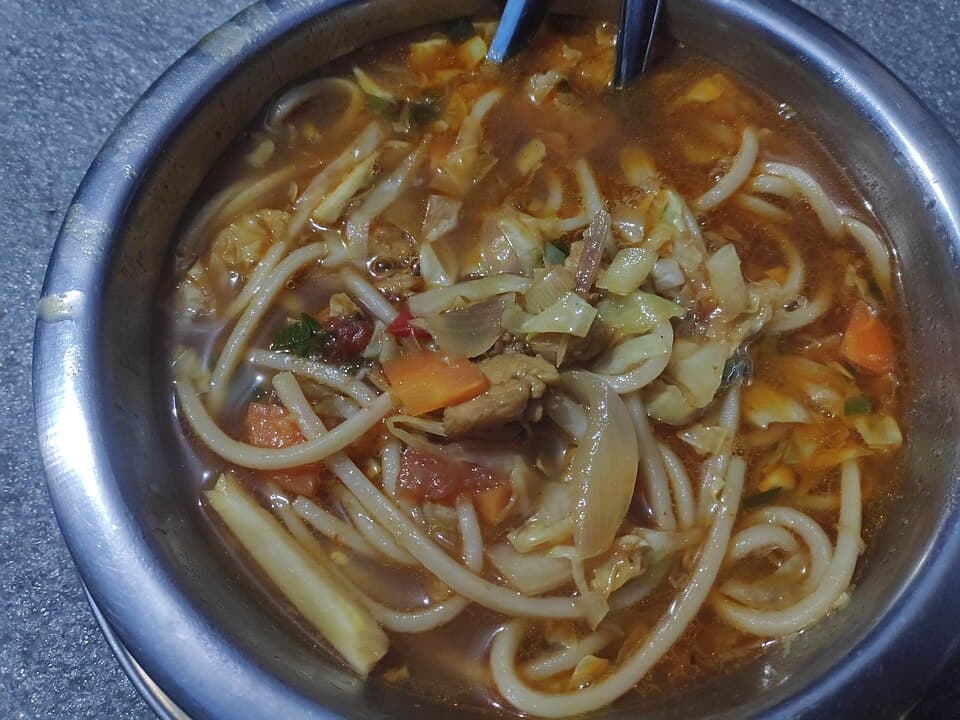
थुक्पाA Tibetan-origin noodle soup that crossed the passes into Nepal and settled into the hill and mountain kitchens as cold-weather comfort food. Long wheat noodles sit in a spiced broth with vegetables and chicken or buffalo, finished with fresh coriander and a squeeze of lemon. In Kathmandu it is winter lunch; on trekking routes it is what you order when you want something hot, salty and restorative.