The full menu
All dishes
Every dish in the TastyNepal collection — search by name, narrow by course, or find something meat-free for tonight.
8 dishes
 Newari Specialties
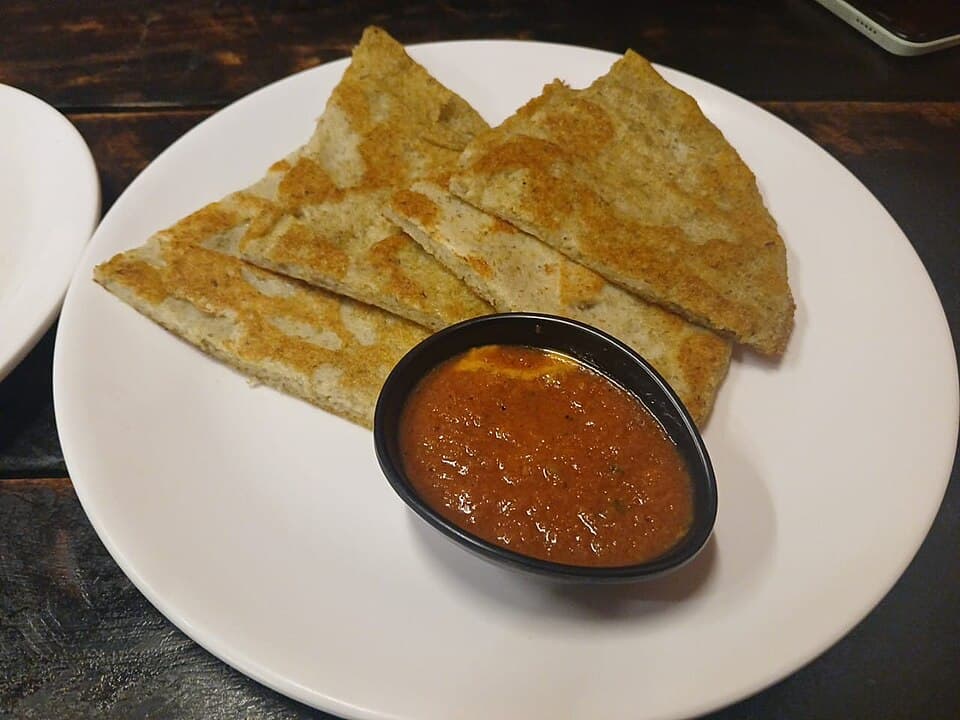
Bara (Wo)
बाराBara — wo in Nepal Bhasa — is a thick, savoury patty of ground black lentils shallow-fried until the outside crackles and the middle stays custardy. It carries real ceremonial weight among Newars, handed over as part of the sagun good-luck offering at birthdays, weddings and rites of passage. Bhaktapur is the town most associated with it, where shops sell it plain, crowned with an egg, or blanketed in minced meat.
 Newari Specialties
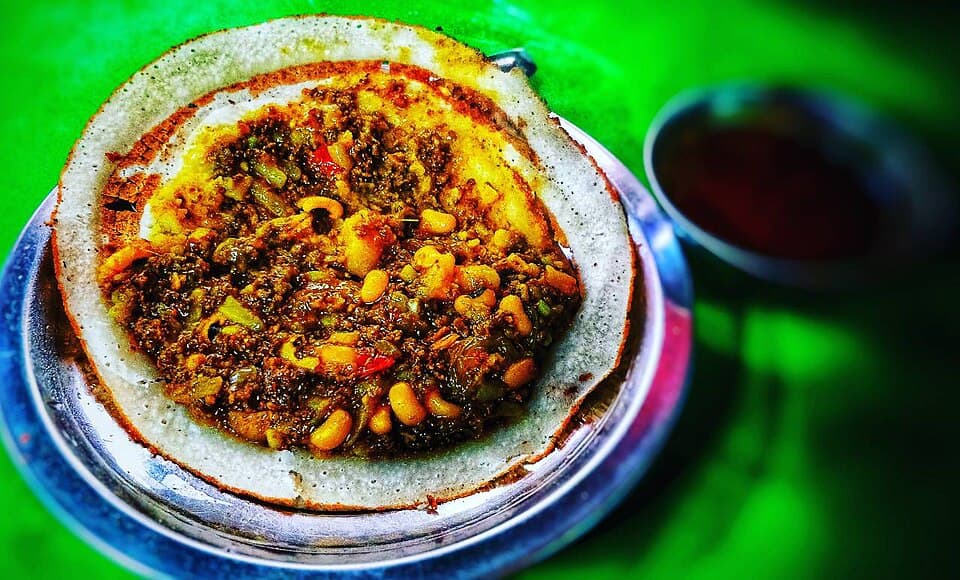
Chatamari
चतांमरिOften called the Nepali pizza by visitors, chatamari is a paper-thin crepe of fermented-free rice batter cooked on a griddle and finished with minced buffalo, egg and aromatics. Newar families traditionally make it for festivals, family gatherings and the arrival of guests rather than as everyday food. It is eaten straight from the pan, folded or torn by hand, with a pinch of ginger and a fiery tomato achar on the side.
 Newari Specialties
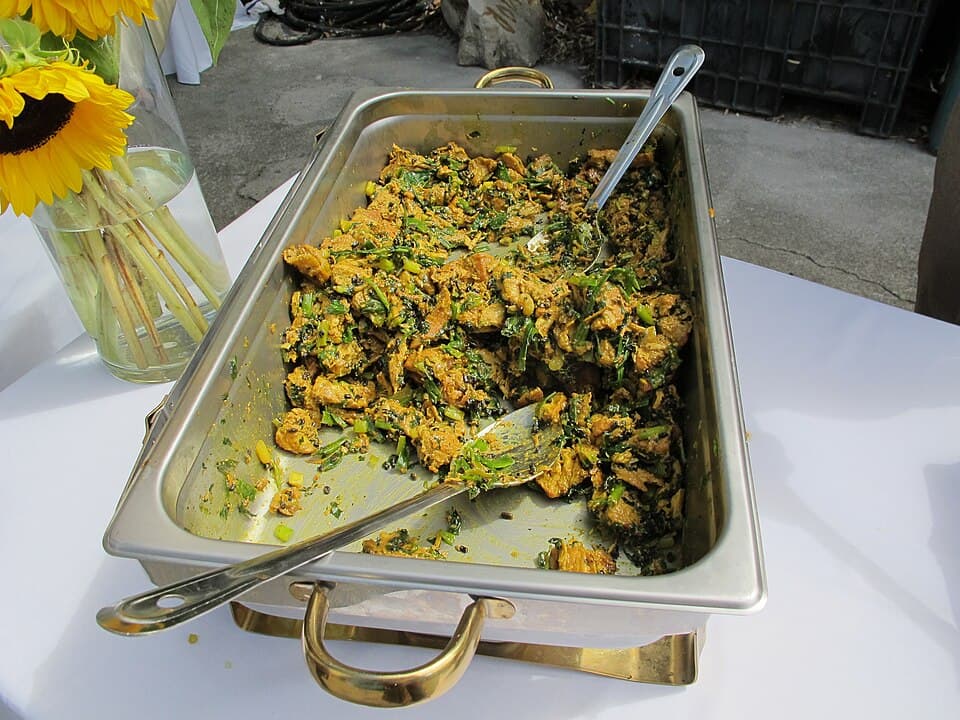
Chhwela (Choila)
छोइलाChhwela is charred, heavily spiced buffalo meat, and it is probably the single dish most people associate with Newar cooking. The classic haku chhwela is scorched over a rice-straw fire so the smoke soaks into the meat before it is tossed with mustard oil, chilli and timur; the gentler manaa chhwela boils the meat first and skips the char. It is standard on the Samay Baji platter and standard again in the evening, eaten with beaten rice and a glass of aila.
Kachila
कचिलाKachila is the Newar answer to steak tartare: finely minced raw buffalo, seasoned hard with garlic, chilli and timur, then finished by pouring smoking mustard oil infused with fenugreek over the top. The hot oil barely kisses the surface, leaving the meat raw beneath but wrapping it in a nutty, pungent aroma. It appears on feast platters and at ritual meals, and connoisseurs insist it must be mixed and eaten within the hour.
 Newari Specialties
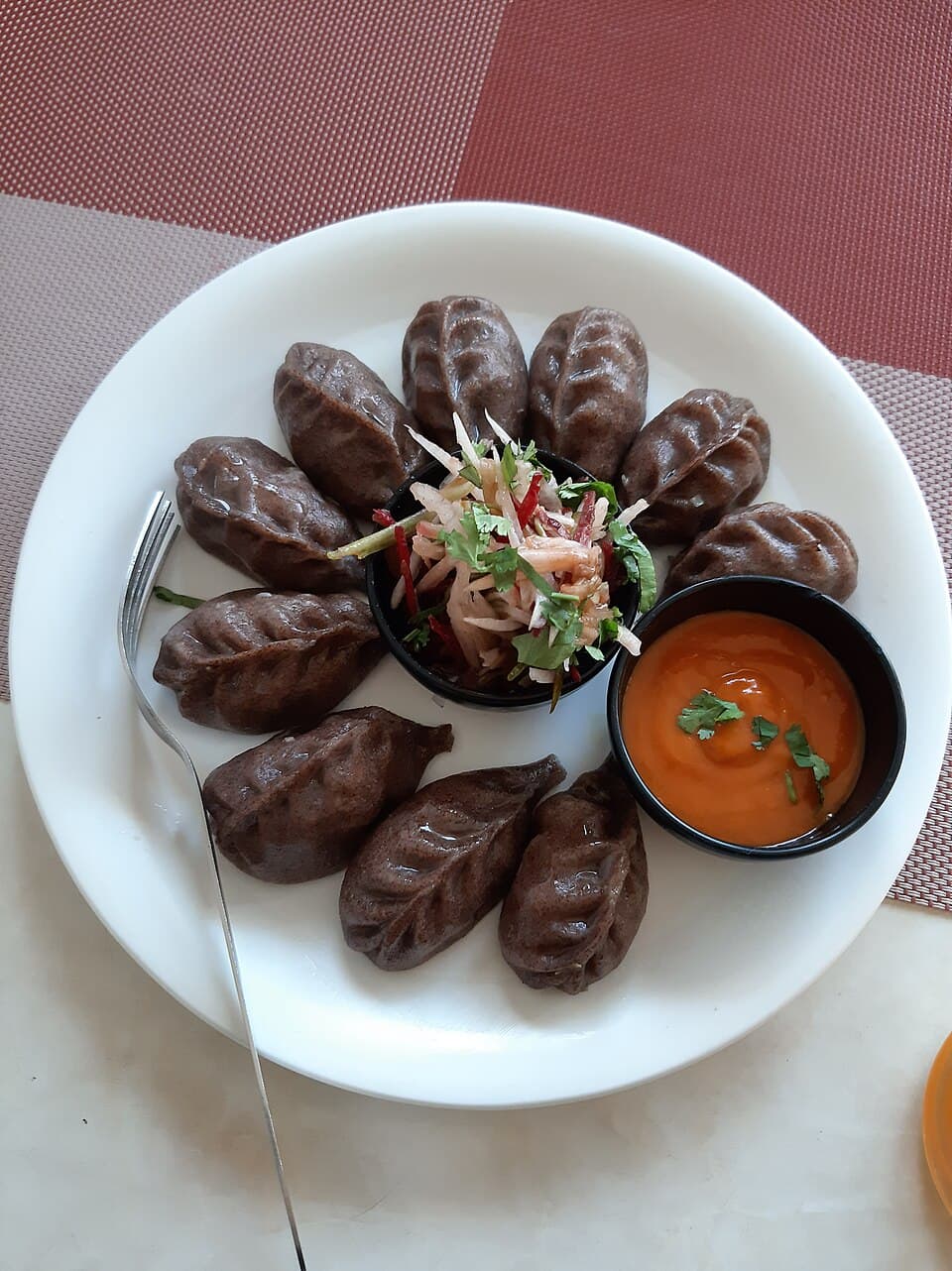
Momocha
मोमोचाMomocha is the Kathmandu Valley's own take on the dumpling, brought back along the Lhasa trade route by Newar merchants and rebuilt around buffalo meat and valley spicing. The traditional plating is ten round dumplings sitting in jhol achar, a thin, tart sesame-and-tomato broth sharpened with timur. Steamed momo shops have been fixtures around Ason and Indra Chowk since the mid-twentieth century, and the jhol is judged as carefully as the filling.
 Newari Specialties
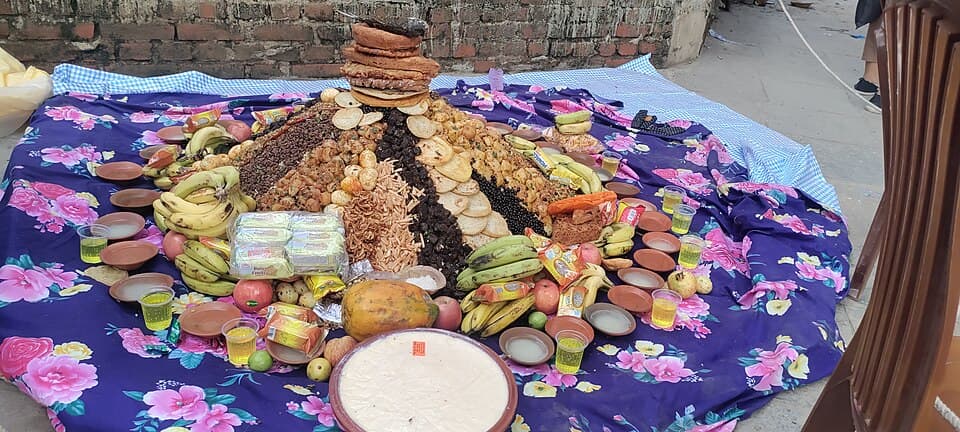
Samay Baji
समय् बजिSamay Baji is the ceremonial platter at the heart of Newar food culture — a ring of small, deliberately contrasting items arranged around a mound of beaten rice. Every component carries meaning, and the set appears at Mha Puja, Indra Jatra, weddings, feasts and ancestor rituals rather than at ordinary meals. Nothing is served hot: it is assembled at room temperature and eaten with the fingers, one combination at a time, usually with a small measure of aila, the home-distilled Newar spirit.
 Newari Specialties
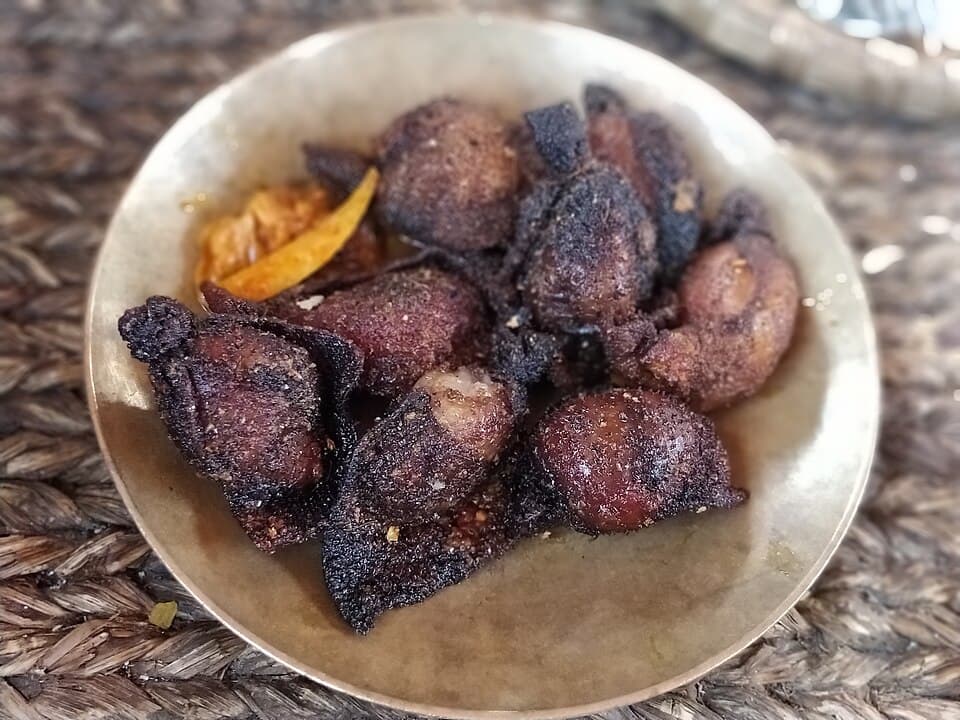
Sapu Mhicha
सःपू म्हिचाSapu mhicha is a small pouch of buffalo leaf tripe packed with bone marrow, tied shut with thread, boiled and then deep-fried until the outside crisps. It is a delicacy of high-feast Newar cooking, served after the main dishes and famously offered to a son-in-law visiting his wife's family. The way to eat it is to put the whole parcel in your mouth, bite it off at the knot and let the marrow flood out — which is exactly why people either adore it or refuse it outright.
 Newari Specialties
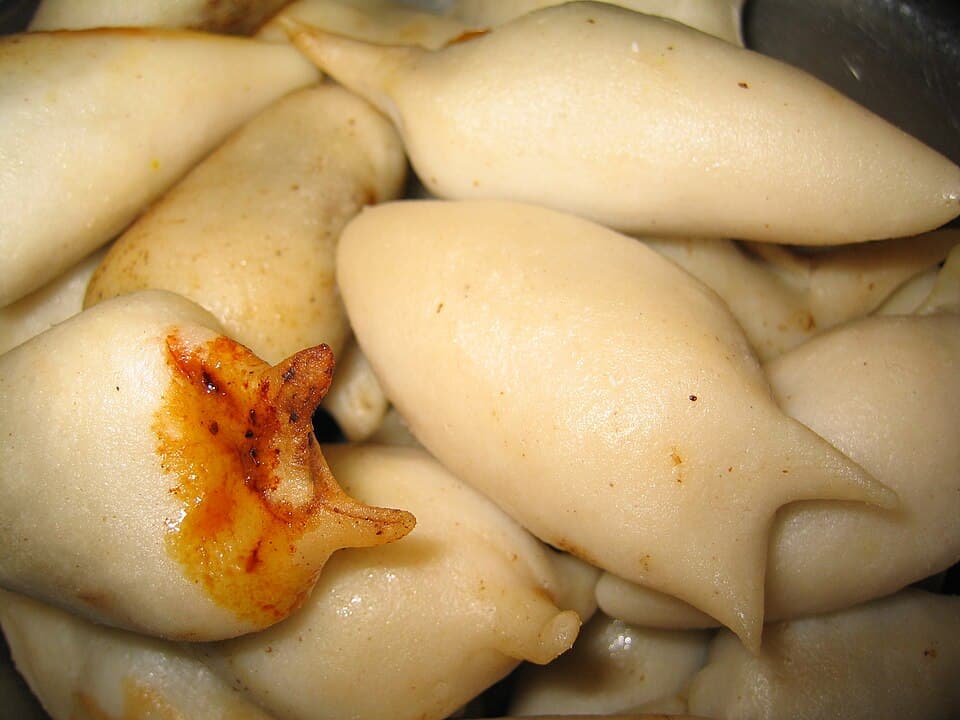
Yomari
योमरीYomari is a steamed rice-flour dumpling pinched into a distinctive fig-like point and filled with molten chaku, the dark cane molasses of the Kathmandu Valley. It belongs to Yomari Punhi, the December full moon that closes the rice harvest, when households steam trays of them as an offering to Annapurna, goddess of grain. The shape is said to echo a flame or a stalk of paddy, and the first bite — hot syrup meeting soft rice dough — is the whole point of the festival.