Beverages
Aila (Newari Rice Spirit)
ऐला
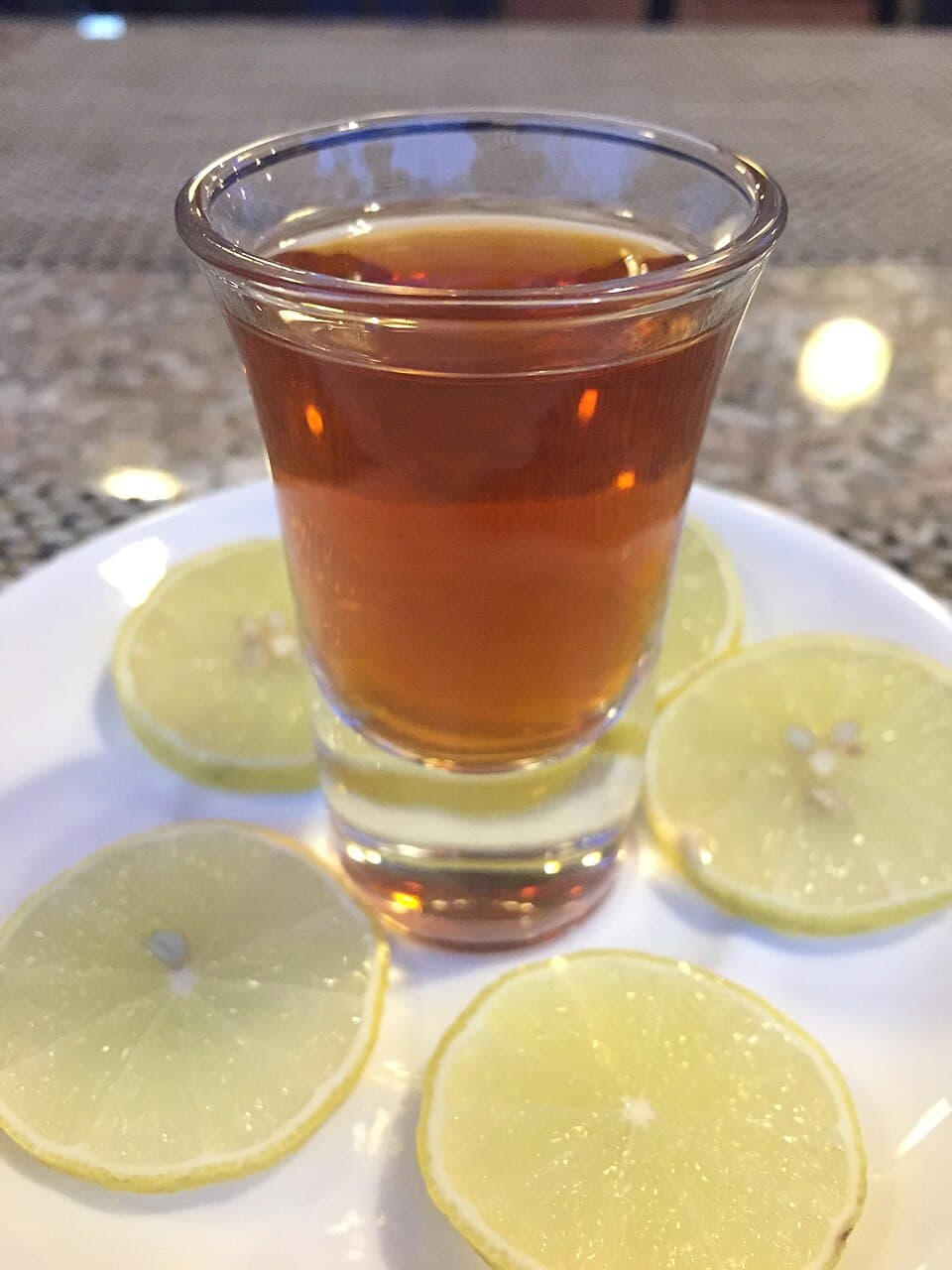
Aila is the clear distilled spirit at the heart of Newar life in the Kathmandu Valley, made by fermenting rice or millet with murcha starter and distilling it in a stacked clay-and-copper still over a wood fire. Far from casual drinking alone, it is ritually essential: aila is offered to deities before humans touch it, forms part of the Sagoon blessing ceremony, and is central to Indra Jatra and Yomari Punhi. It is traditionally served in a shallow clay cup called a salincha, sometimes poured in a long theatrical arc from a jug. Described here as a cultural and educational entry — distilling spirits at home is illegal in most countries.
- Prep
- 60 min
- Cook
- 180 min
- Total
- 4 h
- Serves
- 20
- Difficulty
- Hard
At the stove
Method
Rice or millet is cooked until soft, then spread out and cooled to lukewarm so the starter culture will survive contact with it.
Crushed murcha, a cake carrying wild yeasts and moulds on a base of rice flour and local herbs, is worked evenly through the cooled grain.
The mixture is sealed into a ghyampo and left in a warm corner of the house for four to five days, sometimes longer, until it is unmistakably alcoholic and smells sweet and sour at once.
The fermented mash is transferred into the base pot of the traditional still and set over a slow wood fire.
Rising vapour condenses against the underside of the copper cooling pan sitting on top, and the drops fall into a collecting vessel suspended in the middle of the apparatus.
The cooling water is changed constantly and the flame kept low and even — Newar distillers hold that the temperature of the fire and the coolness of the water decide the quality of the batch entirely.
The first run is strong and harsh; skilled makers separate the fractions, keeping the clean middle portion and discarding the rest.
The finished spirit is poured into a jug and served in salincha cups, first offered to the gods, then shared among guests alongside a Newar bhoye feast of choila, bara and beaten rice.
Note: distillation of spirits is prohibited or licence-controlled almost everywhere. This entry documents a living cultural practice; it is not an instruction to replicate it.
From other kitchens
Reviews
No reviews yet — be the first kitchen to report back.